

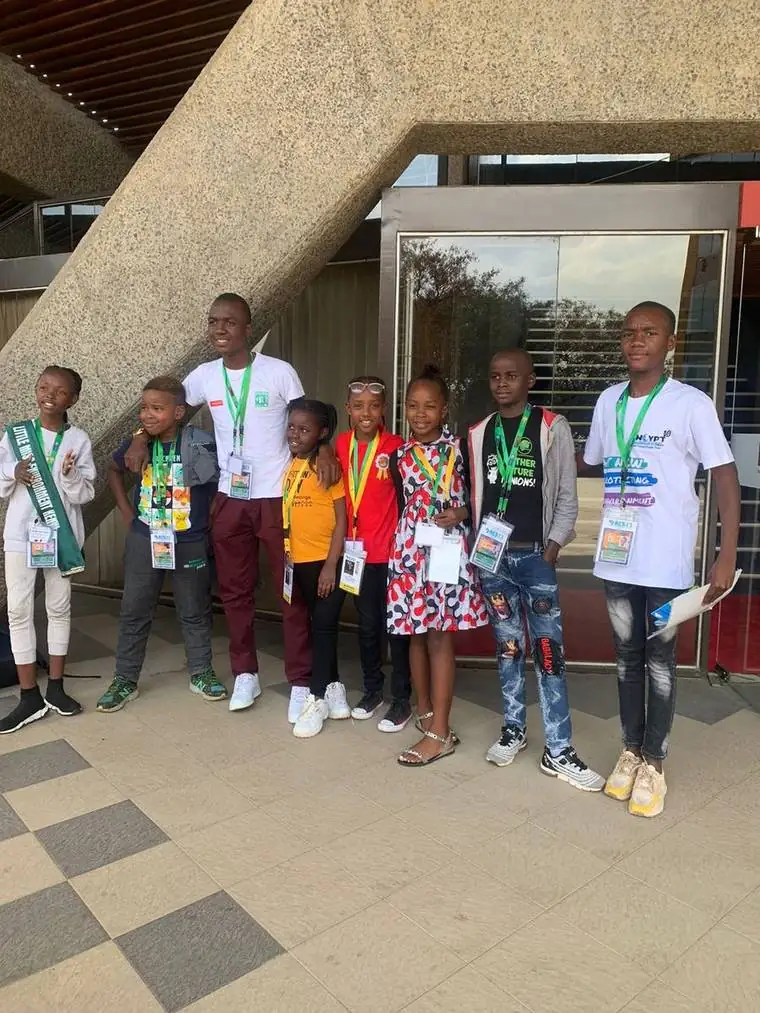
Youth-led since 2017Campaign: #MakeScienceGreatAgainNurture Nature · Restore Land · Champion CommunitiesGoal: 50 million acres restored across Africarestoration has never been only about planting treesKenya · Tanzania · and growingYouth-led since 2017Campaign: #MakeScienceGreatAgainNurture Nature · Restore Land · Champion CommunitiesGoal: 50 million acres restored across Africarestoration has never been only about planting treesKenya · Tanzania · and growing
From Dubai to Antalya: the talks that shape our land.
Every year, the world meets at the UN climate conference (COP) to decide how to tackle climate change. Here we follow what each COP means for Africa, for young people and for restoration.
Updated 20 November 2026, the scheduled final day. Negotiations were still under way at the time of writing; we'll update this page with the final outcome.
Concluded
A divided draft on the last day of the "COP of implementation"
Hosted by Türkiye, with Australia's Chris Bowen presiding over negotiations, COP31 was billed as the "COP of implementation and acceleration". As talks neared their close, a second draft cover decision drew backlash from civil society for being weak on fossil fuels, while some country groups opposed new sectoral targets.
9 – 20 Nov 2026Antalya Expo Center~200 countries
35% electricity by 2035A proposed target for electricity as a share of final energy, opposed by some blocs.
Antalya-to-Addis Ababa RoadmapA proposed roadmap on adaptation and resilience finance, without a set tripling target in the latest draft.
Fossil fuelsThe second draft dropped direct references to fossil fuels and roadmaps, drawing strong criticism.
Next stop: Addis AbabaEthiopia is due to host COP32 in 2027, an African COP.
02Four COPs, four years
COP28 to COP31, at a glance.
The headline decisions from each conference, and why they matter for land, adaptation and the communities we work with.
2023
COP28
Dubai, United Arab Emirates
30 Nov – 13 Dec 2023
Sultan Al Jaber
First global stocktake calls for "transitioning away from fossil fuels" in energy systems
Tripling renewable capacity and doubling energy efficiency by 2030
Loss and damage fund agreed on day one, with hundreds of millions pledged
Framework for the Global Goal on Adaptation
UAE Declaration on sustainable agriculture, food systems and climate
Why it matters for restorationPut adaptation and food systems on the table: both decide whether dryland communities can cope with drought.
2024
COP29
Baku, Azerbaijan
11 – 24 Nov 2024
Mukhtar Babayev
New climate finance goal: developed countries to lead on at least $300bn a year by 2035
A wider call to scale finance to $1.3tn a year by 2035
Rules for international carbon markets (Article 6) finalised
Baku Adaptation Roadmap launched
Youth-led climate forum included children for the first time
Why it matters for restorationFinance decides whether restoration and adaptation reach communities. Many developing countries said $300bn was far too little.
2025
COP30
Belém, Brazil
10 – 22 Nov 2025
André Corrêa do Lago
"Global Mutirão" package adopted without objection
Call to triple adaptation finance by 2035
59 indicators adopted to track adaptation
Tropical Forest Forever Facility raised about $6.6bn
$1.8bn pledged for Indigenous and local community land rights
No fossil-fuel roadmap in the final text
Why it matters for restorationForests, land rights and adaptation indicators moved forward: the building blocks of community-led restoration.
2026
COP31
Antalya, Türkiye
9 – 20 Nov 2026
Murat Kurum (President) · Chris Bowen (President of Negotiations)
Framed as a COP of "implementation and acceleration"
Draft text proposes electricity reaching 35% of final energy by 2035
Proposed "Antalya-to-Addis Ababa Roadmap" on adaptation and resilience finance
Second draft dropped direct fossil-fuel references, drawing criticism
COP32 heads to Addis Ababa, Ethiopia, in 2027
Why it matters for restorationAn African COP is next. What Antalya decides on adaptation finance will shape what Addis Ababa can deliver.
COP stands for the Conference of the Parties: the yearly meeting of the nearly 200 countries that signed the UN Framework Convention on Climate Change. It is where the Paris Agreement was born in 2015, and where countries negotiate how to cut emissions, adapt to climate impacts and pay for it.
Decisions need consensus, which is why outcomes are often hard-fought and late. For communities on the frontline, what is decided on adaptation, finance, forests and land can shape life for years.